
The Rear‑End Protection Guide: Damage Prevention and Sales Creation
Raymond Padgett
Welcome to the world of skid rollers – the tiny steel superheroes that prevent big, expensive, customer‑rage‑inducing damage. If you’ve ever had a customer roll in saying, “My RV made a horrible scraping noise,” congratulations: you’ve already met the problem thee products solve.
Thiis training will turn you into the Skid Wheel experts – the dealer who diagnoses overhang issues in seconds, sells the right solution instantly, and sends customers home feeling like you saved their RV’s or trailer’s life. Because you did.
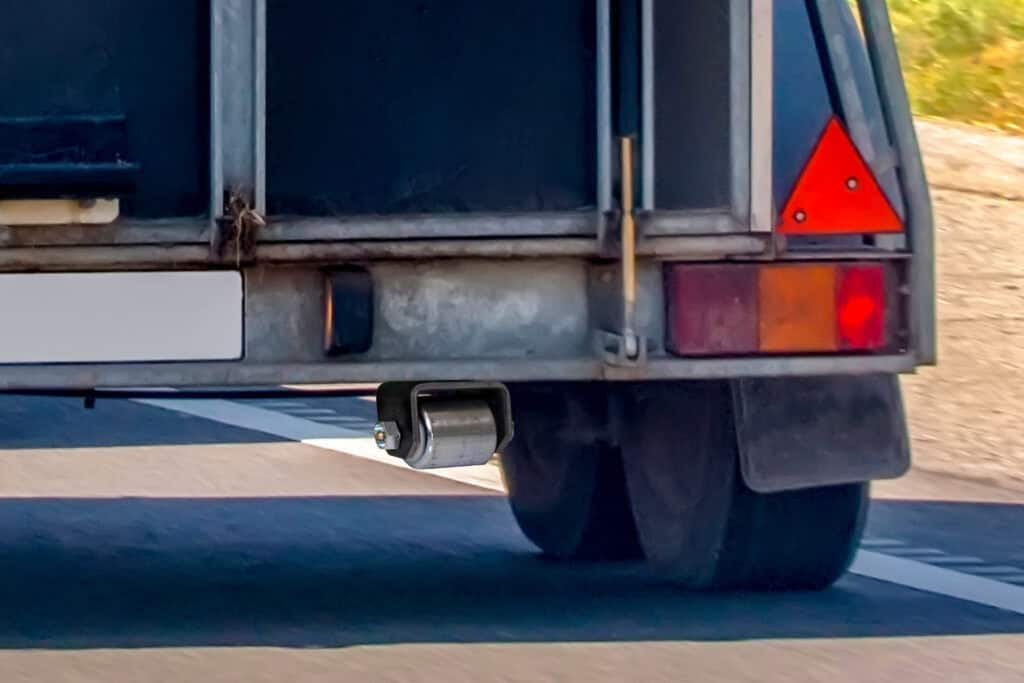
By the end, you’ll be able to:
Explain what skid rollers do in a way that makes customers say, “Oh wow, I definitely need that.”
Identify the right product instantly based on RV or trailer type, overhang length, and customer complaints.
Increase dealership profit with a high‑margin, low‑return accessory that solves a real problem.
Reduce service headaches by preventing bumper, frame, and undercarriage damage.
Sell faster with simple, memorable talking points and 10‑second positioning scripts.
The Tiny Steel Heroes That Save RVs (and Your Reputation)
Skid wheels and skid rollers are one of those product categories that quietly sit on the shelf or the back room, minding their own business, until a customer drags the back of their RV across a driveway and suddenly realizes these little steel heroes are worth their weight in gold. For RV professionals, this category isn’t just “nice to have” – it’s a profit generator, a customer‑satisfaction booster, and a service‑department stress reducer all rolled into one. Literally.
Let’s start with the obvious: RVs and trailers can be long, man are heavy and are often low to the ground. Manufacturers love adding features, slide‑outs, storage, and luxury amenities, but they don’t always add ground clearance. That means customers scraping, dragging, bending, and breaking the back end of their rigs. And when that happens, guess who they blame? Themselves? No. The road? No. They blame the dealership for “not telling them.”
But here’s the real magic: skid wheels turn fear into confidence. Customers who have scraped once are terrified of scraping again. They approach driveways like they’re defusing a bomb. They enter gas stations at 2 mph. They white‑knuckle every dip in the road. When you hand them a set of skid wheels, you’re not just selling hardware – you’re selling peace of mind. You’re selling smoother trips, safer travel, and fewer “Oh no” moments.
From a dealership perspective, skid wheels are the perfect accessory. They solve a real, painful, expensive problem. And customers LOVE products that prevent damage. They love them even more when the price is a fraction of what a bumper, frame, or sewer connection repair would cost. That’s why this category consistently delivers strong conversion rates – once a customer understands what skid wheels do, the sale practically closes itself.
In short: this category matters because it protects RVs, protects customers, and protects your dealership’s reputation – while putting real money in your register. Skid wheels aren’t just an accessory. They’re a necessity. And the dealers who understand that are the ones who win the sale, the loyalty, and the repeat business.
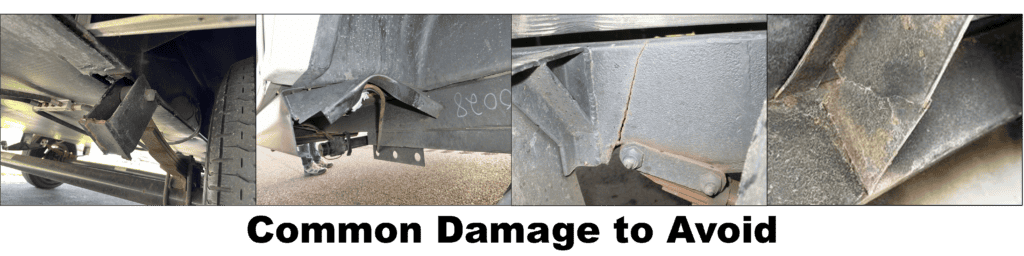
The Rollers That Save Rear Ends-Literally
Skid wheels and skid rollers attach to the lowest, most vulnerable points at the rear of the RV or trailer. When the RV encounters a steep driveway, a crowned road, a campsite dip, or an awkward gas station entrance, the wheels take the hit – rolling the RV forward instead of letting it drag. They prevent metal‑on‑concrete contact, reduce impact forces, and protect components that are expensive, annoying, and sometimes embarrassing to repair.
Skid wheels are used in situations that every RV or trailer owner encounters:
Backing into a sloped driveway
Entering or exiting gas stations
Navigating uneven campground terrain
Crossing dips, gutters, and road crowns
Protecting rear‑mounted accessories
Preventing sewer‑line disasters (the most sacred mission of all)
If the RV has a long overhang, low clearance, or rear‑mounted cargo, skid wheels are practically mandatory.
The Complaints You Hear, the Symptoms They Describe, and the Fastest Way to Recommend the Right Roller
RV owners are consistent. Their complaints usually fall into the same handful of categories, and once you’ve heard them a few times, you can diagnose the problem before they even take out their phone to show you pictures.
Expect lines like:
“I heard this awful scraping noise backing into my driveway.”
“Something under the RV hit the pavement and now it’s bent.”
“My bumper looks like it got into a fight with the road.”
“My sewer outlet almost ripped off-can you imagine the mess?”
“Every gas station entrance is a jump scare.”
They’ll show you:
Fresh scrape marks on the bumper or frame
Bent stabilizer jacks
A sewer connection hanging on for dear life
Drag marks on the pavement where they parked
A rear end that “looks lower than it used to”
These symptoms tell you exactly what’s happening: the RV is dragging because the rear overhang is too long, the departure angle is too shallow, or they’ve added weight to the back-bikes, generators, cargo trays, toolboxes, you name it.
Dragging damage is expensive. Skid rollers prevent it. When you diagnose quickly and confidently, you save the customer money, protect their RV, and position yourself as the expert they trust.
When a customer needs skid wheels or skid rollers, they’re not shopping for a fashion accessory-they’re shopping for the difference between a smooth trip home and a $5,00 (or more) repair bill. That means your job as the parts pro is simple: know exactly what separates a great skid roller from a cheap, decorative, driveway‑destroying knockoff. This section breaks down the critical features, the engineering that matters, and the real‑world performance indicators that define a truly great skid wheel or roller.
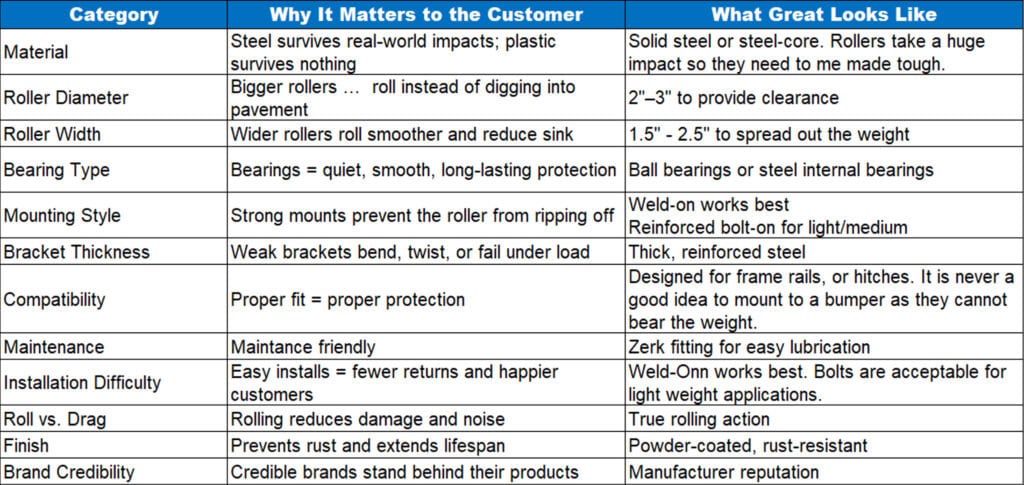
If the wheel isn’t steel, it isn’t serious. Great skid wheels are built from solid steel or at least steel‑core construction, because they’re designed to take the full weight of an RV’s rear end slamming into a driveway dip. Plastic wheels? Those belong on garden carts.
A great skid roller has the right size to actually roll over obstacles instead of digging into them.
Diameter: Larger rollers (2″–3″) roll smoother, reduce drag, and protect better on steep driveways.
Width: Wider rollers (1.5” – 2.5”) distribute force, prevent wobble, and reduce the “metal‑on‑concrete scream” customers complain about. Small wheels don’t roll-they catch. And catching equals damage.
A great skid roller includes internal steel bearings and a grease zerk to allow for regular replenishment of grease. Bearings reduce friction, increase longevity, and prevent the roller from grinding itself into dust. Customers love quiet operation, and bearings are the difference between a smooth roll and a roller that sounds like a shopping cart with a hangover.
A skid roller is only as strong as what it’s attached to. Great skid rollers use thick, reinforced steel brackets and weld‑on options for heavy rigs. If the bracket flexes, bends, or rattles, the roller won’t save anything.
The Hidden Factors That Separate Real Protection From False Security
Before you dive into the brand comparison chart, it’s important to understand why these differences matter. Customers don’t walk in asking for “material specs” or “bearing types.” They walk in because something scraped, bent, broke, or scared them half to death. Your job is to translate their real‑world problem into the right product – and that starts with knowing exactly how brands differ where it counts.
Every category in the chart – material, roller size, bearings, bracket thickness, mounting style, finish, and brand credibility – directly affects how well the roller protects the RV. These aren’t “nice to have” features. They’re the difference between a roller that rolls and a roller that drags, between a bracket that holds and a bracket that bends, between a product that prevents damage and one that causes more of it.
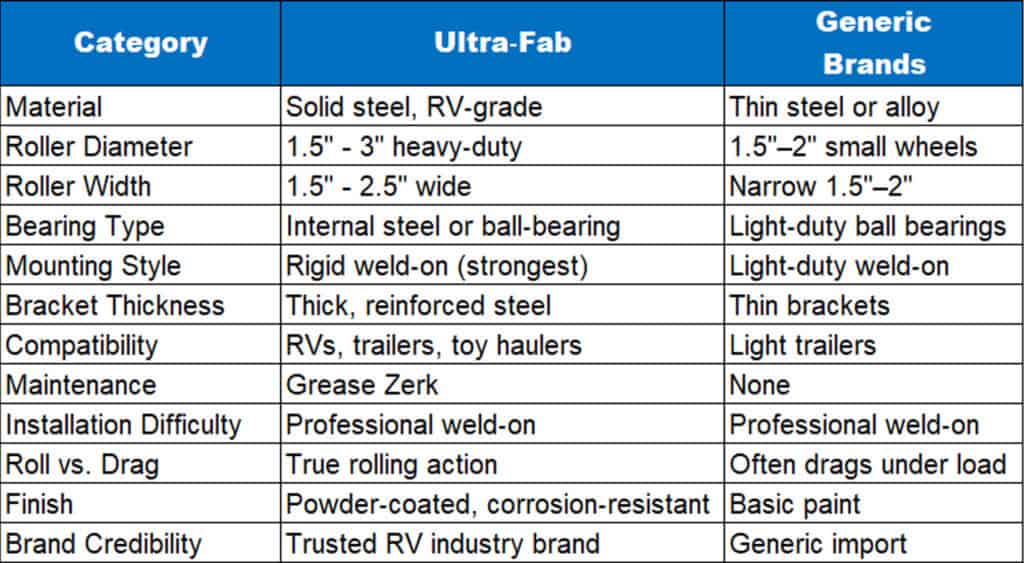
Ultra‑Fab skid rollers aren’t just another accessory – they’re the only rollers engineered specifically for the realities of RV ownership. When an RV drags, it’s not a cosmetic issue. It’s a structural threat: bent bumpers, crushed sewer lines, damaged frames, and repair bills that make customers swear off camping. Ultra‑Fab solves that problem with products built for one purpose: take the hit so the RV doesn’t.
What makes Ultra‑Fab the only real choice starts with material and construction. These rollers use solid, RV‑grade steel – not hollow metal, not thin stamped brackets, not “decorative” hardware. Every component is designed to absorb real impact from real RVs on real roads.
Then there’s roller size and bearing quality. Ultra‑Fab uses large‑diameter, wide rollers with internal steel bearings. That means they actually roll-smoothly, quietly, and consistently. Cheap rollers drag, grind, or seize under load. Ultra‑Fab rollers keep moving, which keeps the RV moving.
The mounting strength is unmatched. Ultra‑Fab weld‑on brackets are thick, reinforced, and engineered to stay put even under repeated impacts. Generic brands flex. Ultra‑Fab holds.
Finally, Ultra‑Fab brings something no competitor can match – credibility. Dealers trust the brand. RV owners recognize it. And Ultra‑Fab stands behind its products with real support, real engineering, and real RV‑industry experience.
When the goal is preventing damage, protecting the customer’s investment, and avoiding expensive repairs, there’s no debate. Ultra‑Fab skid rollers are the only choice built to do the job right.
Ultra‑Fab Skid Roller Options: Find the Right Fit Fast
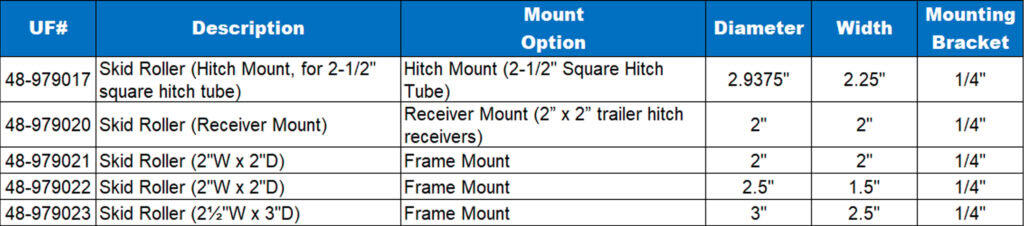
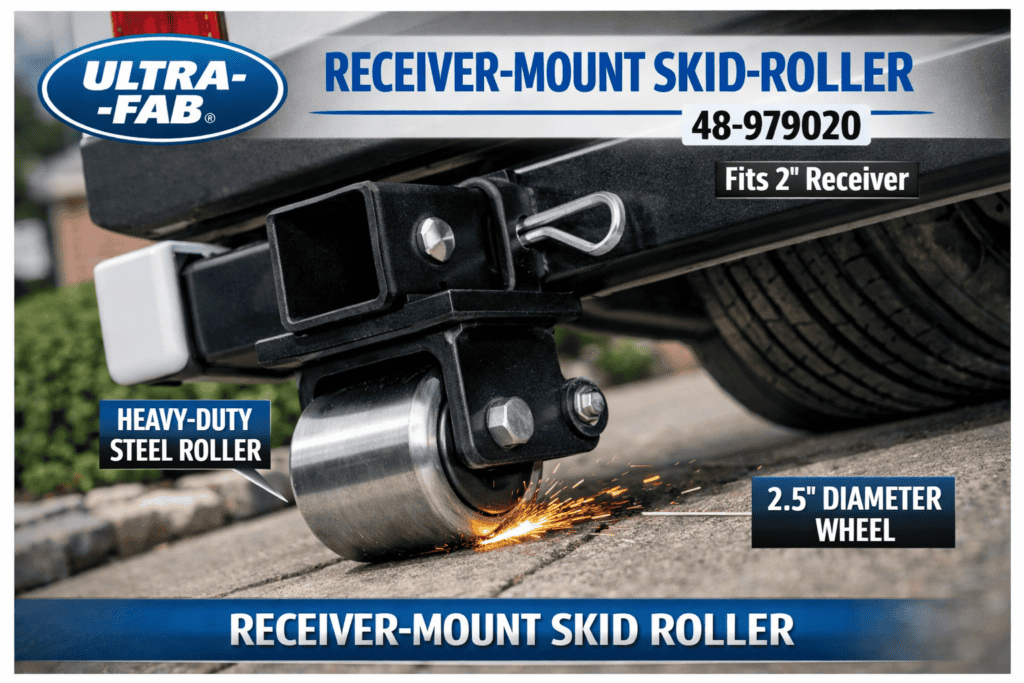
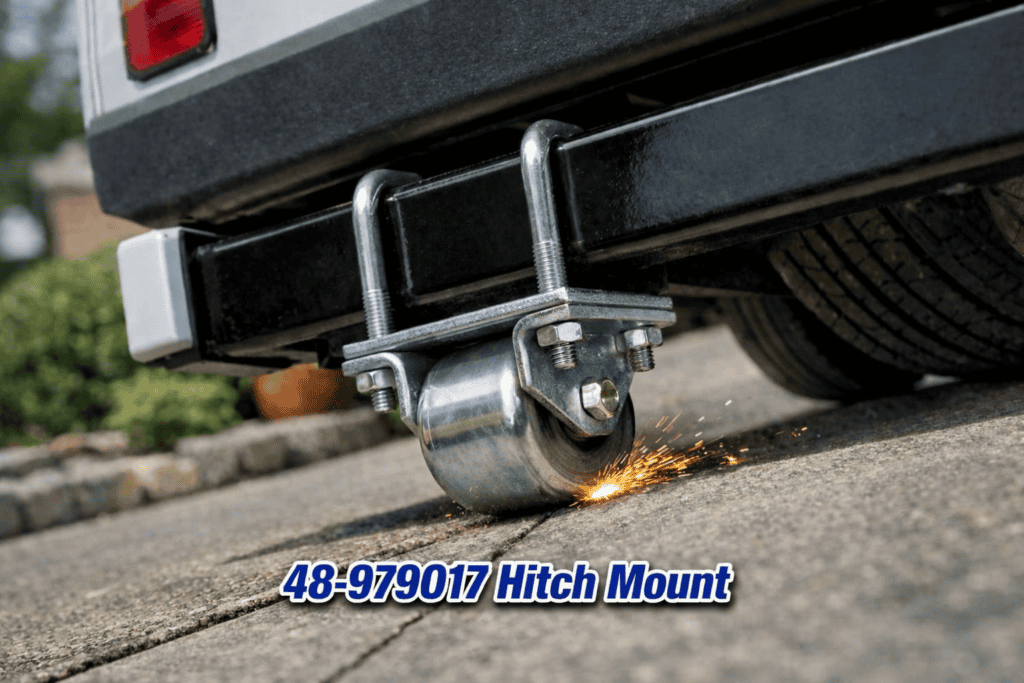
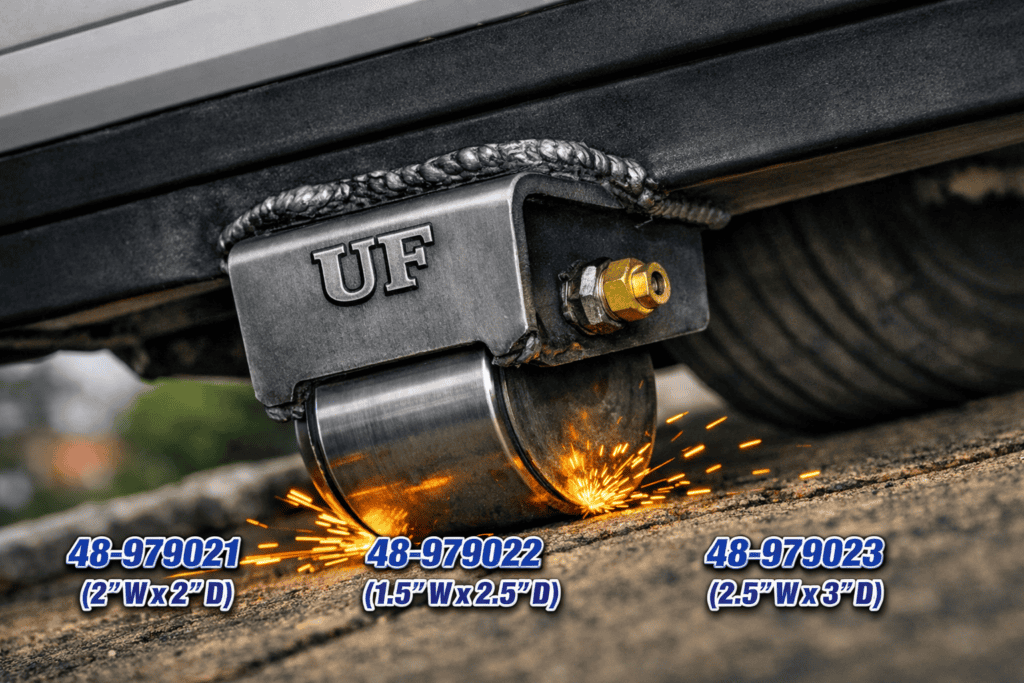
Ultra‑Fab offers a complete, purpose‑built lineup of skid rollers- engineered to protect everything from small travel trailers to full‑size motorhomes. Below is a clear breakdown of every Ultra‑Fab SKU currently available, organized by mounting style and use case so dealers can instantly identify the right fit for any customer. Here is your guide.
The Conversations That Sell Skid Rollers
It’s important to remember that customers rarely walk in asking for skid rollers by name – they walk in describing a problem. A scrape they heard. A bumper they bent. A sewer outlet they nearly ripped off. Their comments are emotional, reactive, and rooted in fear of damaging their RV or trailer. Your job is to translate those real‑world complaints into clear, confident recommendations that solve the problem before it becomes expensive. That’s where great sales scripts come in. Conversations will not go exactly this way, but if you memorize these scripts, you’ll be prepared for practically any customer conversation.
Scenario: Scraping Driveway
Customer: “I heard this awful scraping noise backing into my driveway. Scared me to death.”
Dealer: “That scrape is your RV telling you it needs skid rollers. One more hit like that and you’re looking at bent stabilizers or a crushed sewer outlet. These rollers take the impact instead of your RV – and they cost a fraction of any repair.”
Scenario: “I Already Damaged Something”
Customer: “My bumper is bent from hitting a gas station entrance.”
Dealer: “That’s exactly what skid rollers prevent. A set of rollers costs under a hundred bucks – a bumper repair is hundreds. Install these and you’ll never have to worry about that happening again.
Scenario: “I’m Nervous About Steep Roads”
Customer: “I hate pulling on to my driveaway or a gas station. I’m always afraid I’m going to hit something.”
Dealer: “Skid rollers give you peace of mind. If the rear end touches, the rollers take over. You can pull into any driveway or campsite without white‑knuckling it.”
Even when a customer clearly needs skid rollers, they’ll still hesitate. Not because they don’t trust you, but because they’re trying to justify the purchase in their own mind. Objections aren’t rejection – they’re invitations to clarify, reassure, and guide. When you understand the real fear behind each objection, you can respond with confidence, protect the customer’s RV, and close the sale without pressure. The next section gives you the exact language to turn hesitation into agreement.
Objection: The “Are These Really Necessary?” Script
Customer: “Do I really need skid rollers? I mean… it only scraped once.”
Dealer: “That first scrape was the warning shot. The next one usually causes damage. Skid rollers are the cheapest insurance you can buy for the back of your RV – and they pay for themselves the first time they touch the ground.”
Objection: Pricing
Customer: “I saw cheaper ones online. Why should I buy these?”
Dealer: “Most of those are made for utility trailers. Ultra‑Fab rollers are built for real RVs – solid steel, big rollers, real bearings, and reinforced brackets. They’re engineered to take the full weight of a motorhome hitting a steep driveway. If you want something that actually works, Ultra‑Fab is the only brand built for the job.”
Objection: The “I’ll Just Be More Careful” Objection
Customer: “I’ll just take it slow and be more careful next time.”
Dealer: “Going slow helps, but it doesn’t change the angle of the driveway or the height of your RV. Even at 1 mph, the rear end will still hit if the angle is wrong. Skid rollers don’t replace careful driving – they protect you when careful isn’t enough.”
Installation Basics That Prevent Expensive Mistakes
Installing and operating skid rollers is straightforward but doing it correctly is what ensures maximum protection instead of becoming another point of failure. This section gives your team the essential steps, the most common mistakes to avoid, the safety notes that matter, and the situations where the customer should be referred directly to the service department. This is not an exhaustive installation guide, so always refer to the installation instructions that come with the product.
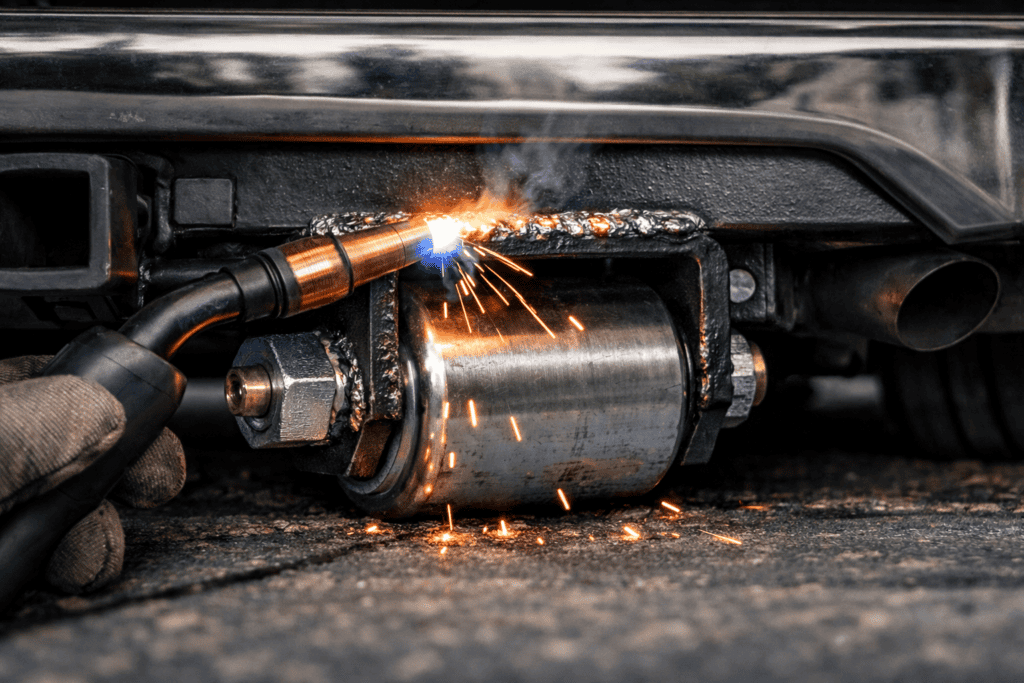
Start: Identify the correct mounting location. Skid rollers must be positioned at the lowest, most rearward point of the RV’s frame- the spot that would hit the ground first during a steep angle. Note: Mounting to a bumper is not recommended as they cannot bear the weight.
Preparation: Once identified, ensure the surface is clean, rust‑free, and structurally sound.
Welding: For weld‑on installations, a qualified welder should tack, align, and fully weld the brackets to the frame.
Bolt-On: For bolt‑on versions, align the bracket, mark the holes, drill clean openings, and secure the hardware using lock washers or thread‑
Operational Testing: After installation, spin the roller by hand to confirm smooth rotation and verify that the roller sits just above ground level when the RV is level.
The most common mistake is mounting the rollers too far forward, which prevents them from engaging when the RV actually drags. Another frequent issue is attaching rollers to thin metal, such as decorative bumpers or non‑structural trim – these surfaces cannot handle impact and will bend or tear. Customers also sometimes install rollers too low, causing them to contact the ground constantly, which leads to premature wear. Finally, failing to tighten hardware or skipping thread‑locker can cause rollers to loosen over time.
If the frame shows rust, cracks, or previous impact damage, installation should be handled by a certified technician. Any situation requiring welding should also be referred to service unless the customer has professional welding experience. If the RV has aftermarket cargo carriers, generators, or custom bumpers that complicate mounting, service should evaluate the best installation point. And if the customer reports severe dragging, bent stabilizers, or sewer‑line damage, the service department should inspect the RV before installing rollers to ensure no structural issues are being overlooked.
And if your roller has a grease zerk (which should be mandatory), be sure to grease it every 6-12 months.
Sell the Product That Protects Your Customers-and Your Reputation
By now, you’ve seen exactly why skid wheels and skid rollers aren’t just another accessory on the shelf – they’re smart, high‑impact products you can recommend to any RV or trailer owner. Every scrape, every bent bumper, every near‑miss sewer disaster is a reminder that the back end of an RV lives a dangerous life.
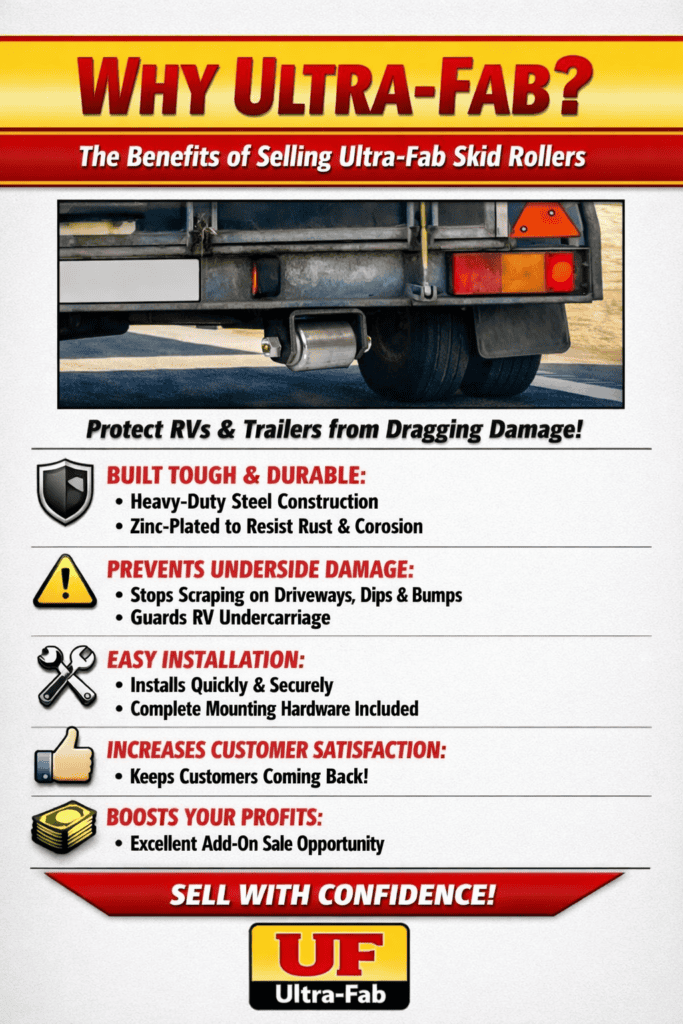
Ultra‑Fab gives you the advantage because the products are engineered for real weight and real‑world impacts. Solid steel construction, wide rolling surfaces, internal bearings, reinforced brackets. They’re the difference between a roller that actually protects an RV and one that folds the first time it meets a steep driveway. When you recommend Ultra‑Fab, you’re recommending the only brand built specifically for the realities your customers face every day.
And here’s the best part: customers want protection. They want peace of mind. They want to avoid the embarrassment and expense of dragging damage. When you show them how skid rollers solve the exact problem they just described, the sale becomes natural, easy, and appreciated.
So make Ultra‑Fab skid rollers a standard part of your conversations. Stock them. Recommend them. Sell them with confidence. Because when you protect your customers’ RVs, you protect your dealership’s reputation-and you build the kind of loyalty that keeps people coming back.
Ultra‑Fab skid rollers don’t just save rear ends. They save relationships. They create revenue. And they make you the hero every customer remembers.
Ready to win the sale? Start with Ultra‑Fab.
Test Your Knowledge: Prove Your Skid Roller Expertise
It’s important to make sure you can confidently apply everything you’ve learned-diagnosing customer complaints, choosing the right skid roller, explaining why Ultra‑Fab is the best solution. The following review questions are designed to test the skills that matter most on the parts counter and showroom floor. If you can answer these, you’re ready to recommend, sell, and stock Ultra‑Fab skid rollers like a pro.

1) A customer says their sewer outlet “almost ripped off” backing out of a gas station. What’s the correct recommendation?
A) Replace the sewer cap
B) Add decorative bumper trim
C) Tell them to avoid gas statoins
D) Install skid rollers to protect low-handing components
2) A customer added accessories with significant weight to the rear of their trailer and now hears scraping. What does this indicate?
A) Their tires are underinflated
B) They need skid rollers due to reduced rear clearance
C) They should remove the bikes
D) Their suspension is broken
3) A customer shows fresh scrape marks on the bumper and bent stabilizer jacks. What’s the best solution?
A) Install skid rollers to prevent future dragging
B) Replace the jacks only
C) Add more rear cargo
D) Raise the hitch height